
Blog
How to Choose the Right Floor When Buying an Apartment

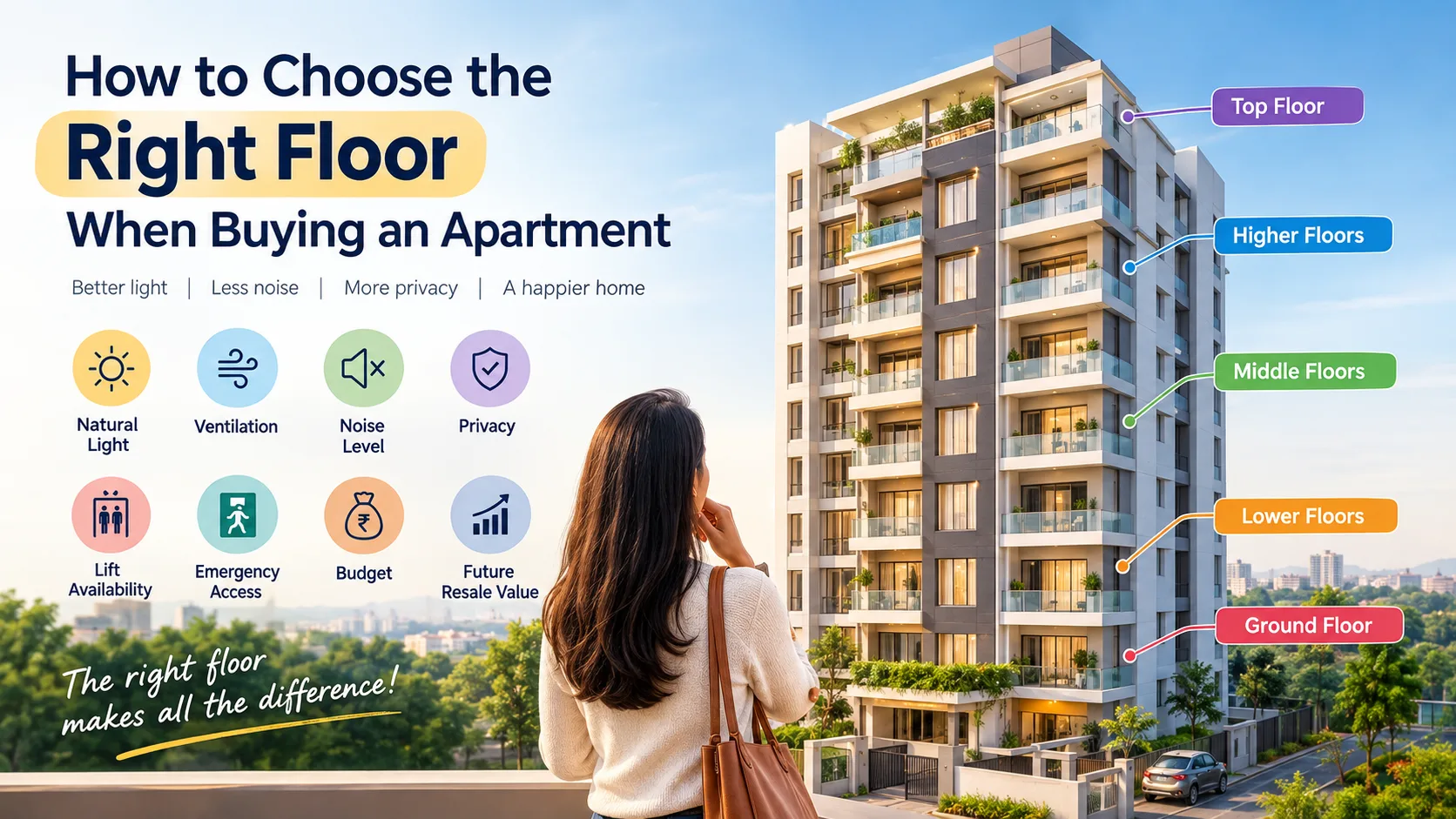
Choosing an apartment is not only about the location, price, layout, or amenities. The floor you choose can also affect your comfort, privacy, natural light, ventilation, noise levels, maintenance, and resale value.
A ground-floor apartment may be convenient for families who want easy access, while a higher-floor apartment may offer better views, privacy, and less street-level noise. The right choice depends on your lifestyle, budget, family needs, and the location of the building.
Quick AI Overview
The best floor to buy in an apartment depends on your personal needs. Lower floors offer easier access and convenience, while middle floors often provide a balance of accessibility, ventilation, privacy, and noise. Higher floors can offer better views, more privacy, and less road-level disturbance, but buyers should also consider lift dependency, emergency access, heat, water pressure, and maintenance.
Before choosing a floor, compare price, sunlight, ventilation, noise, privacy, accessibility, view, safety, and future resale requirements.
Why Does the Floor Matter When Buying an Apartment?
The floor of your apartment can influence your everyday living experience. Two apartments in the same building with the same size and layout can feel very different simply because they are on different floors.
For example:
- Lower floors can be easier to access.
- Middle floors may offer a balanced living experience.
- Higher floors can provide better views and privacy.
- Road-facing apartments may experience more noise.
- Top-floor homes may receive more direct sunlight and heat.
- Higher floors may depend more on lifts.
Therefore, don’t select a floor only because it is available or cheaper. Think about how you will use the apartment for many years.
Ground Floor Apartment: Is It a Good Choice?
Ground-floor apartments are usually preferred by buyers who want easy access.
Advantages of Ground Floor
- Easy entry and exit
- Convenient for senior citizens
- Suitable for families with young children
- Less dependence on lifts
- Easier during emergencies
- Convenient for carrying groceries and furniture
- Often easier for daily movement
Things to Consider
Ground-floor homes may have some disadvantages:
- Less privacy
- More exposure to people walking around the building
- Possible street or entrance noise
- Security considerations
- Less open view compared with higher floors
- Depending on the building, there may be more dust
A ground-floor apartment can be suitable when accessibility and convenience are your top priorities.
Lower Floors: Convenience with Better Accessibility
Lower floors, such as the first or second floor, can provide a practical balance between accessibility and apartment living.
They are easier to reach than higher floors and generally don’t require long lift journeys.
These floors may be suitable for:
- Families with elderly members
- Buyers who prefer quick access
- People who don’t want to depend heavily on lifts
- Families with small children
- Buyers who regularly move in and out
However, check the apartment’s position carefully. A flat directly above a busy entrance, parking area, or common facility may experience additional noise.
Middle Floors: A Balanced Option
For many buyers, middle floors can provide a balance between convenience and privacy.
They may offer:
- Better privacy than lower floors
- Good natural light
- Better ventilation
- Less street-level noise
- Easier access than very high floors
- A reasonable combination of view and convenience
But the actual experience depends on the building’s design, surrounding structures, road traffic, and apartment orientation.
Instead of assuming that a particular floor is always best, visit the property and compare different floors if possible.
Higher Floors: Better Views and Privacy
Higher floors can be attractive if you prefer an open view and greater privacy.
Advantages
- Better city or landscape views
- More privacy
- Less direct street-level disturbance
- Potentially better airflow depending on building design
- Less exposure to pedestrians and vehicles
Possible Disadvantages
- Greater dependence on lifts
- Longer evacuation routes during emergencies
- Lift waiting time can become inconvenient
- Higher exposure to direct sunlight in some buildings
- Outdoor conditions such as strong winds may be more noticeable
Before buying a high-floor apartment, check the lift system, backup power, emergency arrangements, water supply, and building maintenance.
Top Floor Apartment: What Should You Check?
Top-floor apartments can provide excellent privacy and views, but they deserve additional inspection.
Before buying, check:
- Terrace and roof construction
- Waterproofing
- Ceiling condition
- Heat insulation
- Water pressure
- Lift availability
- Backup power
- Maintenance arrangements
- Past leakage or seepage issues
A well-designed top-floor apartment can be comfortable, but buyers should carefully inspect the construction and building systems before making a decision.
8 Important Factors to Consider Before Choosing a Floor
1. Natural Light
Check how much sunlight enters the apartment during different times of the day.
Good natural light can make a home feel brighter and more comfortable.
2. Ventilation
Don’t judge ventilation only by looking at the windows.
Check:
- Window placement
- Cross ventilation
- Nearby buildings
- Balcony direction
- Air movement inside rooms
3. Noise Level
Noise can come from:
- Main roads
- Parking areas
- Elevators
- Staircases
- Children’s play areas
- Clubhouses
- Commercial spaces
- Building entrances
Visit the property at different times if possible.
4. Privacy
Think about how easily people outside can see inside your apartment.
Lower floors may have more activity around them, while higher floors generally offer greater separation from street-level movement.
5. Lift Availability
If you’re choosing a higher floor, lift quality becomes very important.
Ask:
- How many lifts are available?
- Is there a service lift?
- Is there power backup?
- How is lift maintenance handled?
6. Emergency Access
Safety should always be considered.
Check the building’s:
- Fire exits
- Staircases
- Emergency systems
- Fire safety equipment
- Emergency access arrangements
7. Budget
Floor preference can affect the apartment’s price in many projects.
Don’t spend beyond your comfortable budget simply to get a higher floor.
Compare the additional cost with the benefits you actually need.
8. Future Resale
Consider what future buyers may look for.
Factors such as:
- Floor
- View
- Natural light
- Ventilation
- Privacy
- Accessibility
- Building condition
- Location
can influence how attractive an apartment is to future buyers.
Which Floor Is Best for Senior Citizens?
For senior citizens, accessibility is often more important than having a high-floor view.
A lower or middle floor may be more convenient, especially if the residents prefer using stairs occasionally or want to reduce dependence on lifts.
However, if a higher floor is preferred, make sure the building has reliable lifts and proper emergency arrangements.
Which Floor Is Better for Families With Children?
Families with children should consider both safety and convenience.
A lower or middle floor may provide easier access, but parents should also check:
- Balcony safety
- Window safety
- Staircase access
- Nearby play areas
- Noise levels
- Security arrangements
The floor itself is only one part of making an apartment child-friendly.
Which Floor Is Better for Investment?
There is no single floor that guarantees better investment returns.
The attractiveness of a floor can depend on:
- Project location
- Local demand
- Apartment price
- Building quality
- Views
- Amenities
- Connectivity
- Developer reputation
- Future development around the project
For investment purposes, compare the purchase price with the features and demand for that specific floor rather than choosing based on floor number alone.
Ground Floor vs Middle Floor vs Higher Floor
| Factor | Ground/Lower Floor | Middle Floor | Higher Floor |
|---|---|---|---|
| Accessibility | Excellent | Good | Depends on lift |
| Privacy | Lower | Good | Higher |
| Street Noise | Can be higher | Moderate | Usually lower |
| View | Limited | Good | Often better |
| Lift Dependency | Low | Moderate | High |
| Convenience | High | High | Depends on building |
| Airflow | Depends on design | Often good | Often good |
| Emergency Access | Easier | Moderate | Requires more attention |
Important: These are general considerations. Actual conditions can vary significantly from one apartment project to another.
Common Mistakes Buyers Should Avoid
Choosing Only by Floor Number
Don’t assume the 10th floor is automatically better than the 3rd floor.
Ignoring Apartment Direction
Two apartments on the same floor can have completely different sunlight, ventilation, and views.
Not Checking Noise
Visit the property during morning and evening hours before making a final decision.
Ignoring Lift Backup
Higher-floor buyers should check whether lifts work during power interruptions and how reliable the backup system is.
Focusing Only on the View
A beautiful view is attractive, but practical factors such as ventilation, maintenance, accessibility, and safety should also be considered.
Not Checking Future Construction
A beautiful open view today may change if another building or development comes up nearby. Check the surrounding area’s development plans where possible.
How to Choose the Right Floor: Simple Checklist
Before booking an apartment, ask yourself:
- Does this floor suit my family?
- Is there enough natural light?
- Is ventilation good?
- Is the apartment quiet?
- Do I get enough privacy?
- Is the view likely to remain attractive?
- Are lifts reliable?
- Is there power backup?
- Are emergency exits easily accessible?
- Is the floor within my budget?
- Have I checked the apartment at different times of the day?
- Have I compared other available floors?
If the answer to these questions is satisfactory, you can make a more informed decision.
Final Thoughts
There is no universally perfect floor for every homebuyer. The right floor depends on your family, lifestyle, budget, accessibility requirements, privacy preferences, and expectations from the apartment.
A lower floor may be practical, a middle floor may offer a balanced experience, and a higher floor may provide better privacy and views. The important thing is to look beyond the floor number and evaluate the complete apartment and building.
Before booking, visit the property, compare multiple floors, check sunlight and ventilation, understand the additional floor cost, and review safety and lift facilities.
This simple approach can help you choose an apartment that feels comfortable not only on the day you buy it, but for years to come.
FAQs
Which floor is best to buy in an apartment?
The best floor depends on your lifestyle, budget, accessibility needs, privacy preferences, and the building’s design. Middle floors are often considered a practical balance, but every buyer should compare the available options.
Is it better to live on a higher floor or lower floor?
Lower floors offer easier access, while higher floors can provide more privacy and better views. The better option depends on your individual requirements.
Which floor is best for senior citizens?
Lower or middle floors can be convenient for senior citizens because they reduce dependence on lifts. However, a higher floor can also work if the building has reliable lifts and proper emergency facilities.
Is the top floor good for buying an apartment?
A top-floor apartment can offer greater privacy and better views. Buyers should also inspect waterproofing, roof insulation, heat, water pressure, lift facilities, and maintenance before purchasing.
Which floor has less noise in an apartment?
Higher floors generally have less direct road and street-level noise, but noise can still come from lifts, common areas, nearby buildings, or other apartments.
Does the floor affect apartment price?
Yes, the price can vary by floor in some apartment projects. The difference depends on the developer, project, location, views, demand, and other project-specific factors.
Which floor is best for natural light?
Natural light depends on the apartment’s direction, window placement, surrounding buildings, balcony position, and floor height. A higher floor may receive more open light, but the apartment’s orientation is also important.
Should I buy a flat on the ground floor?
A ground-floor flat can be convenient for families who prefer easy access and less dependence on lifts. Before buying, check privacy, noise, security, ventilation, and the apartment’s proximity to common areas.