Blog
RERA Approved Apartments: Why RERA Matters Before Buying a Home

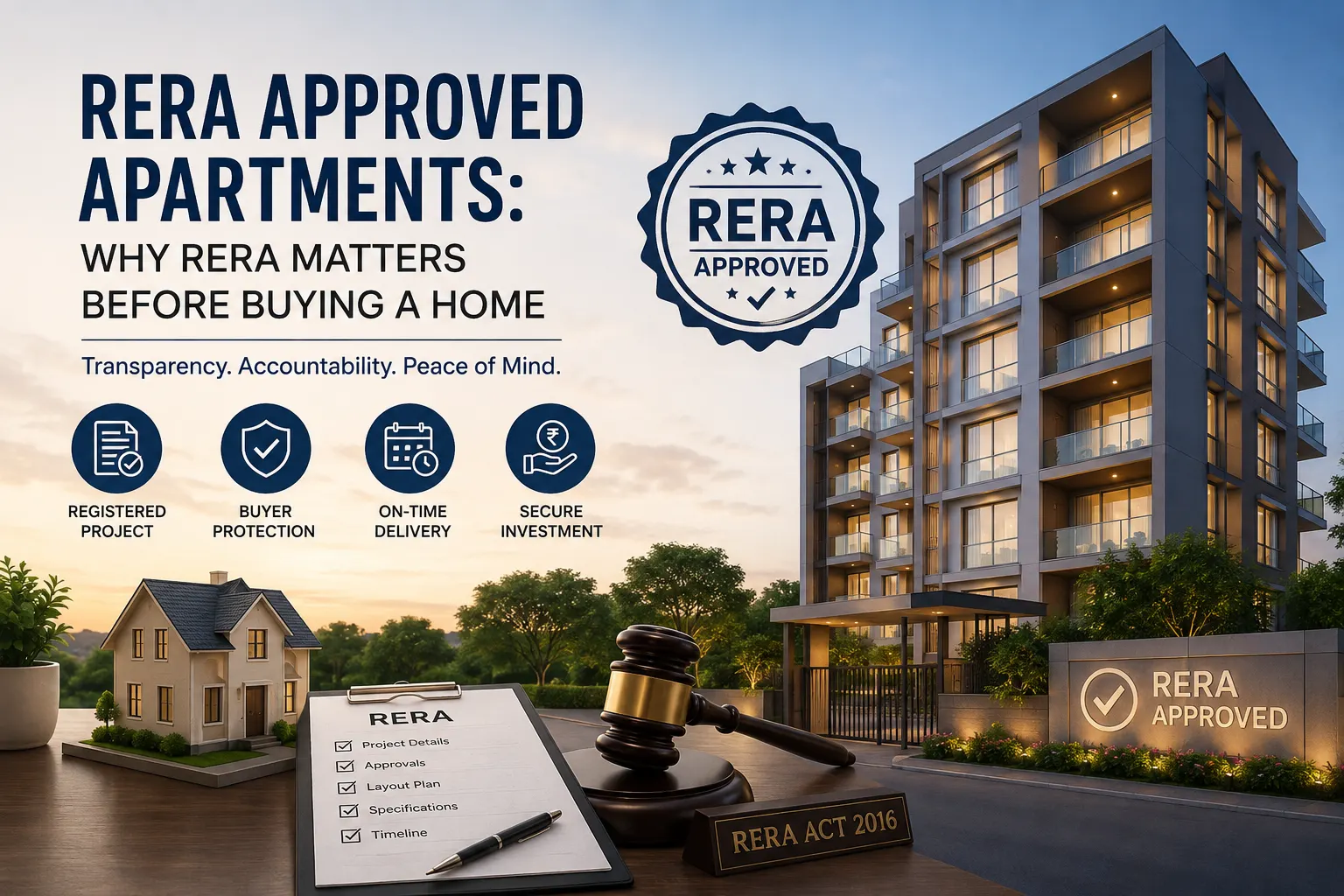
Buying an apartment is a major financial decision. Before booking a home, checking whether the project is registered under RERA can help buyers make a more informed and secure decision. This blog explains what RERA is, why it matters, and what every homebuyer should check before investing in an apartment.
Introduction
Buying a home is not just about choosing a good location or a beautiful apartment. It is also about making sure that your investment is safe and that the project details are transparent.
This is where RERA becomes important.
Before booking an apartment, buyers should check the project’s RERA registration and review the information available on the relevant state RERA portal. RERA was introduced to bring greater transparency and accountability to the real estate sector and to protect the interests of homebuyers.
For homebuyers in Bhopal and Madhya Pradesh, project information can be checked through the official Madhya Pradesh RERA portal.
What Is RERA?
RERA stands for the Real Estate (Regulation and Development) Act, 2016.
In simple words, RERA is a law designed to make the real estate sector more transparent and accountable. It requires eligible real estate projects to be registered with the relevant state or Union Territory Real Estate Regulatory Authority before they are advertised, marketed, booked, or sold.
A RERA-registered project provides buyers with access to important project information, helping them make a better-informed decision.
Why Does RERA Matter Before Buying a Home?
Imagine finding your dream apartment. The location is perfect, the sample flat looks beautiful, and the amenities are attractive. But before paying a booking amount, there is one important question you should ask:
Is the project registered with RERA, and have I verified the details myself?
RERA helps buyers by creating a system where important project information, declared timelines, and other disclosures can be reviewed through the regulatory framework. It also provides a structured mechanism for addressing certain disputes and grievances.
1. Better Transparency for Homebuyers
One of the biggest benefits of RERA is transparency.
Eligible registered projects are required to disclose important information such as approved plans, project details, specifications, completion schedules, and other relevant information. Buyers can use this information to compare what is being promised with what has been officially disclosed.
This makes it easier to ask the right questions before investing.
2. Clearer Information About Project Timelines
Project delays can create serious financial and personal difficulties for homebuyers.
Under the RERA framework, promoters must provide project completion information and updates as required by the applicable rules. This creates greater accountability and gives buyers access to information about the declared project timeline.
However, buyers should remember that a RERA registration does not automatically guarantee that every project will be completed exactly on the originally declared date. It is still important to check the current project status and any extensions or updates.
3. Protection Against Diversion of Project Funds
The RERA framework includes financial discipline for registered projects. Under the central framework, 70% of the amounts collected from buyers is required to be deposited in a separate bank account for land and construction costs of that project, subject to the provisions of the Act and applicable rules.
For a buyer, this is an important step toward greater financial accountability.
4. Carpet Area Brings More Clarity
Before RERA, terms such as super built-up area could sometimes make it difficult for buyers to understand how much usable space they were actually getting.
RERA established a standard definition of carpet area, helping buyers better understand the actual usable area of an apartment and compare properties more clearly.
Before buying a flat, always ask:
- What is the carpet area?
- What is the built-up area?
- What is the total saleable area?
- What exactly is included in the price?
A clear understanding of these details can help avoid confusion later.
5. Important Project Information Can Be Verified
A RERA registration number should not simply be treated as a marketing statement. Buyers should verify it.
Depending on the applicable state portal and project information available, buyers may be able to review details such as:
- Project registration information
- Promoter details
- Approved plans and layouts
- Project specifications
- Declared completion timelines
- Project progress updates
- Other disclosures required under the applicable RERA rules
Government guidance encourages buyers to use RERA registration details and project disclosures before making a property purchase.
How to Check Whether an Apartment Project Is RERA Registered
The process is generally simple.
Step 1: Ask for the RERA Registration Number
Request the project’s official RERA registration number from the developer or sales team.
Step 2: Visit the Official State RERA Website
Go to the official RERA portal for the state where the property is located. The Ministry of Housing and Urban Affairs provides a list of state and Union Territory RERA authorities.
For properties in Madhya Pradesh, use the official MP RERA website.
Step 3: Search for the Project
Search using the project name, registration number, or other available search options.
Step 4: Review the Project Details
Check whether the details shown on the official portal match the information provided by the developer.
Step 5: Review the Current Status
Do not only check whether the project is registered. Also review the available information regarding project progress, declared timelines, updates, and any other relevant disclosures.
Important Things to Check Before Booking a RERA Registered Apartment
RERA registration is an important factor, but it should not be the only factor in your buying decision.
Before booking, check the following:
RERA Registration Number
Verify the registration number directly on the official state RERA portal.
Builder or Promoter Details
Check the promoter information and, where available, details of previous projects.
Approved Plans
Review whether the apartment layout and project details match the approved information.
Carpet Area
Understand exactly how much usable space you are buying.
Possession Timeline
Check the declared completion or possession timeline and the current project status.
Agreement for Sale
Read the agreement carefully before signing. Do not rely only on verbal promises.
Total Cost of the Apartment
Ask for a complete cost breakdown, including applicable charges, taxes, parking, maintenance, and other expenses.
Amenities and Specifications
Make sure the promised amenities and specifications are properly documented.
What Happens If a Builder Delays Possession?
RERA provides a legal and regulatory framework for buyer rights and obligations in cases involving project delays or other issues covered by the Act and applicable rules.
Depending on the facts of the case and applicable provisions, an aggrieved buyer may have remedies such as seeking interest, compensation, or other relief through the appropriate authority.
The exact outcome can depend on the agreement, the project, applicable state rules, and the specific circumstances of the case.
Can a Builder Make Major Changes to the Project?
RERA places restrictions on changes to sanctioned plans and project specifications. Certain changes may require the consent of allottees as provided under the Act. For example, changes involving sanctioned plans or common areas are subject to statutory requirements, including consent provisions in applicable situations.
This gives homebuyers greater protection against unexpected changes after they have booked a property.
Does Every Property Need RERA Registration?
Not every property falls under the same registration requirement.
Under the central RERA framework, certain projects are exempt, including projects where the land proposed to be developed does not exceed 500 square metres or where the number of apartments does not exceed eight, subject to the provisions of the Act and applicable state rules. Projects that received a completion certificate before the commencement of the Act may also fall outside the registration requirement.
Because rules and exemptions can depend on the state and the specific project, buyers should verify the property’s status rather than assuming that a project is non-compliant simply because it does not appear in a RERA search.
RERA Registered Does Not Mean You Should Skip Other Checks
This is an important point for every homebuyer.
A RERA registration helps improve transparency and accountability, but it should not replace your own due diligence.
Before making a final decision, also consider:
- Location and connectivity
- Builder’s track record
- Apartment layout
- Construction quality
- Legal and financial documentation
- Loan eligibility
- Total purchase cost
- Maintenance expenses
- Current project status
- Your family’s future requirements
A smart property decision should combine RERA verification with proper personal and financial due diligence.
Why RERA Is Especially Important for First-Time Homebuyers
First-time buyers may not be familiar with technical real estate terms, approvals, timelines, or legal documents.
RERA makes it easier to start with verified project information instead of depending completely on advertisements or verbal commitments. The main benefit is not simply having a RERA number—it is using the available information to ask better questions before investing.
A Smart Homebuying Approach
Before paying a booking amount, follow this simple approach:
Verify → Compare → Read → Understand → Then Invest
Do not rush because of a limited-time offer or sales pressure. Buying a home is a long-term decision, and a few hours spent checking important details can help you make a more informed choice.
Final Thoughts
RERA has made the Indian real estate sector more transparent by creating clearer responsibilities for developers and providing buyers with access to important project information and regulatory mechanisms. The Act’s objective is to protect homebuyers and promote accountability in the real estate sector.
If you are planning to buy an apartment, checking the RERA status should be one of your first steps. At the same time, remember that RERA registration is part of your due diligence—not a substitute for checking the entire property, agreement, costs, and project details carefully.
A well-informed buyer is always in a better position to make a confident property decision.
Frequently Asked Questions
What is RERA in real estate?
RERA stands for the Real Estate (Regulation and Development) Act, 2016. It was introduced to improve transparency and accountability in the real estate sector and protect the interests of homebuyers.
How can I check if an apartment is RERA registered?
Ask for the project’s RERA registration number and search for it on the official RERA portal of the state where the property is located. For a property in Madhya Pradesh, use the official MP RERA portal.
Is it safe to buy a RERA registered apartment?
RERA registration provides an additional level of transparency and regulatory accountability. However, buyers should still independently check the project status, documents, agreement, costs, builder details, and other important factors before purchasing.
What documents should I check before buying a RERA registered flat?
You should review the RERA registration details, approved plans, project specifications, agreement for sale, possession timeline, cost breakup, and other relevant legal and financial documents.
What is the benefit of buying a RERA registered property?
Major benefits include better access to project information, greater transparency, declared project timelines, standardized carpet area disclosure, financial discipline requirements, and a structured grievance redressal mechanism under the RERA framework.
Can I file a complaint against a builder under RERA?
An aggrieved buyer may file a complaint before the appropriate RERA authority regarding matters covered under the Act and applicable rules. The process and available remedies can vary according to the facts of the case and the relevant state rules.
What happens if a RERA registered project is delayed?
Depending on the circumstances and applicable provisions, buyers may be entitled to remedies such as interest, compensation, or other relief. The specific outcome depends on the agreement, facts of the case, and applicable law.
Does RERA guarantee possession on time?
No system can guarantee that every project will be completed without delays. RERA creates disclosure and accountability requirements, but buyers should continue to check the project’s current status and any extensions or updates.
Can a builder change the apartment layout after booking?
Changes to sanctioned plans and project specifications are regulated under RERA, and certain changes require the consent of allottees as specified under the law.
Is RERA registration mandatory for every real estate project?
No. Certain projects may qualify for exemptions under the Act, such as smaller projects within the statutory limits or projects that had already received a completion certificate before the Act came into force. State-specific rules may also be relevant.